Full Menu / Blog / Allergen List

Tim Hortons tracks ten priority allergens in Canada: milk, eggs, wheat and gluten, peanuts, tree nuts, soy, sesame, seafood, mustard, and sulphites. Because restaurant kitchens use shared toaster belts, blenders, and prep surfaces, cross-contamination is possible across all items. Always review official allergen guides and alert staff before ordering.
What Are Canada's Priority Allergens on the Tim Hortons Menu?
Canada recognizes ten priority food allergens under Health Canada and Canadian Food Inspection Agency (CFIA) regulations: milk, eggs, wheat and triticale (gluten sources), peanuts, tree nuts, soy, sesame seeds, seafood (fish, crustaceans, and molluscs), mustard, and sulphites. Tim Hortons structures its official Canadian documentation directly around these ten categories, providing clear designations for whether an ingredient contains a specific trigger or carries a precautionary "may contain" warning.
The official guide differentiates between direct recipe formulation and accidental contact. A "Contains" designation (marked with an "x" in company charts) indicates that the allergen is an intentional component of the recipe, such as milk solids in cheese or wheat flour in a bagel. A "May Contain" designation (marked with an "o") means the allergen is not an intentional recipe ingredient, but shared manufacturing facilities, supplier lines, or kitchen assembly environments create a tangible risk of cross-contact.
| Priority Allergen | Primary Menu Sources at Tim Hortons | Common "May Contain" Risk Items |
|---|---|---|
| Milk / Dairy | Cheese slices, butter, dairy cream, baked goods, white hot chocolate, chowder | Steamed beverages, plant-based drinks, glazes |
| Eggs | Freshly cracked Grade A eggs, egg patties, cake donuts, muffins, mayonnaise | Yeast donuts, croissants, specialty beverage toppings |
| Wheat / Gluten | Donuts, Timbits, bagels, English muffins, biscuits, wraps, flatbreads | Chili, potato wedges, cream soups via shared prep |
| Peanuts | Peanut butter spread, Peanut Butter Cookie | Dream Donuts, specialty seasonal pastries |
| Tree Nuts | Walnut Crunch Donut, select seasonal baked goods | Lattes, cold beverages, all donuts and Timbits |
| Soy | Beef Chili (textured vegetable protein), cake donuts, margarine, chocolate glazes | Yeast donuts, bagels, breakfast wraps |
| Sesame | Sesame seed bagels, Everything bagels, Everything Flatbread Pizza | Plain bagels, English muffins, toaster-warmed breads |
| Fish & Shellfish | Boston Clam Chowder (clams) | Soups prepared in shared warmers |
| Mustard | Mayonnaise, sandwich spreads, Steak & Egg biscuit seasoning | Deli sandwiches, grilled breakfast wraps |
| Sulphites | Boston Cream filling, fruit fillings, dried fruit toppings | Flavoured syrups, frozen beverages, glazes |
Understanding this regulatory baseline allows Canadian diners to evaluate risk quickly before stepping up to the counter. For detailed caloric and nutritional macronutrient data alongside allergy facts, consult our Tim Hortons nutrition guide.
Comprehensive Tim Hortons Allergen Matrix (10 Priority Allergens)
The comprehensive allergen matrix below outlines allergen presence across core Tim Hortons menu items based on standard Canadian formulations. Standard items are cross-referenced across all ten Canadian priority allergens to help identify safe choices and high-risk categories before ordering.
| Menu Item | Milk | Egg | Wheat / Gluten | Peanuts | Tree Nuts | Soy | Sesame | Fish / Shellfish | Mustard | Sulphites |
|---|---|---|---|---|---|---|---|---|---|---|
| Original Blend / Dark Roast (Black) | Free | Free | Free | Free | Free | Free | Free | Free | Free | Free |
| Double Double Coffee | Contains | Free | Free | Free | Free | Free | Free | Free | Free | Free |
| Hot Chocolate | Contains | Free | Free | Free | Free | May Contain | Free | Free | Free | Free |
| French Vanilla Cappuccino | Contains | Free | Free | Free | Free | Contains | Free | Free | Free | Free |
| Original Iced Capp (Cream Base) | Contains | Free | May Contain | Free | May Contain | Free | Free | Free | Free | Free |
| Oat Milk Latte | May Contain | Free | May Contain | Free | May Contain | Free | Free | Free | Free | Free |
| Honey Dip Donut (Yeast) | Contains | May Contain | Contains | Free | May Contain | May Contain | Free | Free | Free | May Contain |
| Boston Cream Donut (Yeast) | Contains | May Contain | Contains | Free | May Contain | May Contain | Free | Free | Free | Contains |
| Chocolate Glazed Donut (Cake) | Contains | Contains | Contains | Free | May Contain | Contains | Free | Free | Free | May Contain |
| Walnut Crunch Donut | Contains | Contains | Contains | Free | Contains | Contains | Free | Free | Free | May Contain |
| Chocolate Chip Muffin | Contains | Contains | Contains | Free | May Contain | Contains | Free | Free | Free | May Contain |
| Plain Bagel (Un-toasted) | May Contain | Free | Contains | Free | May Contain | May Contain | May Contain | Free | Free | Free |
| Everything Bagel | May Contain | Free | Contains | Free | May Contain | May Contain | Contains | Free | Free | Free |
| Bacon, Egg & Cheese Biscuit | Contains | Contains | Contains | Free | Free | Contains | Free | Free | Free | Free |
| Sausage Farmer's Wrap | Contains | Contains | Contains | Free | Free | Contains | Free | Free | Free | Free |
| Beef Chili | Free | Free | May Contain | Free | Free | Contains | Free | Free | Free | Free |
| Chicken Noodle Soup | Free | Contains | Contains | Free | Free | Contains | Free | Free | Free | Free |
| Boston Clam Chowder | Contains | Free | Contains | Free | Free | Contains | Free | Contains | Free | Free |
| Cheese Flatbread Pizza | Contains | Free | Contains | Free | Free | Contains | Free | Free | Free | Free |
Reviewing this matrix demonstrates that while simple hot brewed coffees are completely allergen-free, bakery items, wraps, and specialty beverages carry extensive allergen networks. If you are comparing item energy values alongside ingredients, review our complete Tim Hortons calorie breakdown.
How Does Tim Hortons Handle Cross-Contamination in Kitchens?
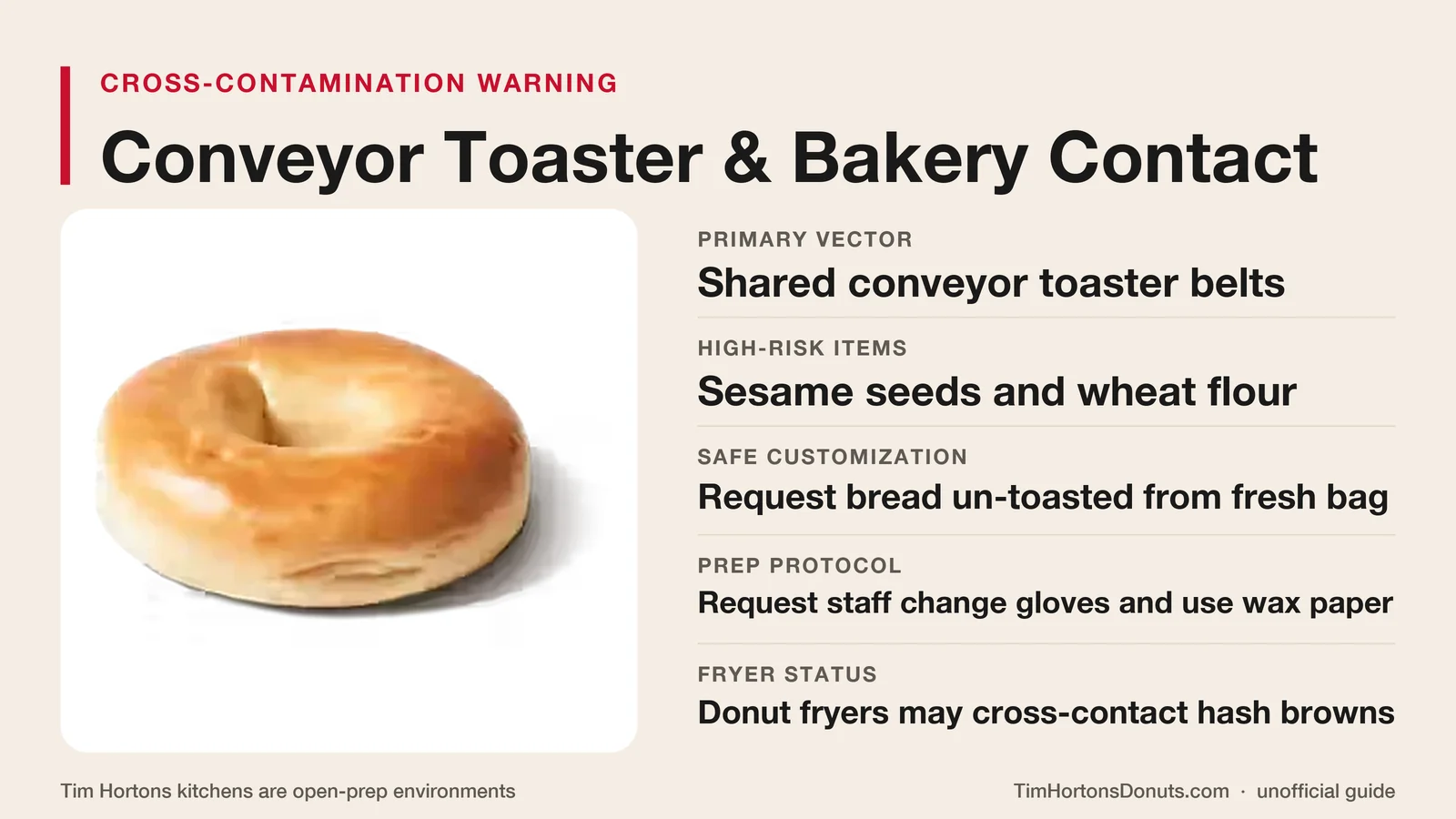
Tim Hortons kitchens operate as fast-paced environments with open-concept assembly lines and shared food preparation equipment. The company explicitly warns in its Canadian documentation that it cannot guarantee any item is 100% free from cross-contact with allergens.
Cross-contact occurs when an allergen-containing food touches an allergen-free item or when both items share tools, surfaces, or cooking equipment without complete chemical sterilization in between. At Tim Hortons, several operational bottlenecks present distinct risks that diners with severe or anaphylactic allergies must understand.
| Kitchen Equipment Vector | Primary Allergens Present | Operational Mechanism | Risk Level |
|---|---|---|---|
| Conveyor Toaster Belts | Sesame, Wheat, Gluten, Milk | Continuous moving metal belts toast all bread varieties sequentially | High |
| Commercial Beverage Blenders | Milk, Soy, Wheat, Tree Nuts | Rapid rinse cycles between Iced Capps, frozen drinks, and chill mixes | Medium–High |
| Espresso Steam Wands | Dairy Milk, Almond Milk, Oat Milk | Steaming wands purged with steam and wiped with damp sanitizing cloths | High |
| Shared Bakery Ovens & Racks | Wheat, Milk, Egg, Tree Nuts | Racks and baking trays handle par-baked goods in central ovens | Medium |
| Sandwich Assembly Prep Line | Egg, Milk, Mustard, Soy, Sesame | Cutting boards, tongs, and spatulas assemble wraps and hot breakfast | High |
Shared Conveyor Toaster Belts and Sesame Risks
Conveyor toasters represent one of the highest cross-contamination vectors in the restaurant. Sliced bagels, English muffins, artisan buns, and specialty croissants travel across the exact same continuously heated metal conveyor belt throughout the day.
Sesame seeds from Everything bagels and Sesame bagels routinely detach during toasting, accumulating on the wire belt and in the collection tray. When a plain bagel or English muffin passes through immediately afterward, loose sesame seeds and toasted wheat crumbs adhere directly to its surface. Guests with severe sesame or wheat allergies should request their bread items un-toasted or heated separately in a clean container rather than run through the conveyor belt.
Commercial Blenders and Espresso Steam Wands
Beverage stations rely on high-volume commercial blenders and espresso steam wands to craft hundreds of drinks per shift. Blender pitchers used for dairy-rich Iced Capps and Oreo-topped specialty drinks are rinsed in sink stations, but milk fats, gluten cookie crumbs, and soy lecithin residues can persist between uses.
Similarly, espresso steam wands froth standard Canadian dairy milk alongside Silk Almond beverage and oat beverage. While baristas wipe down and purge steam wands with steam bursts between drinks, micro-residues of dairy and almond proteins can transfer into subsequent beverages. If you have an anaphylactic tree nut or dairy allergy, inform the barista directly so they can retrieve a sanitized pitcher and clean wand cloth.
In-Store Baking and Glazing Stations
Tim Hortons does not fry raw donuts from scratch in open kettles at individual retail locations. Instead, bakery items are par-baked at a centralized, state-of-the-art facility in Brantford, Ontario, flash-frozen, and shipped to local restaurants where they are finished in commercial convection ovens and finished at glazing stations.
While this eliminated traditional open-vat scratch frying cross-contact in store kitchens, baked goods share cooling racks, sheet pans, and glazing troughs. Glazes, fondants, and finishing tongs frequently contact multiple donut varieties in rapid succession. Consequently, trace amounts of tree nuts, peanuts, egg, and soy can migrate across the entire bakery display case.
Tim Hortons Baked Goods and Donuts Allergen Breakdown
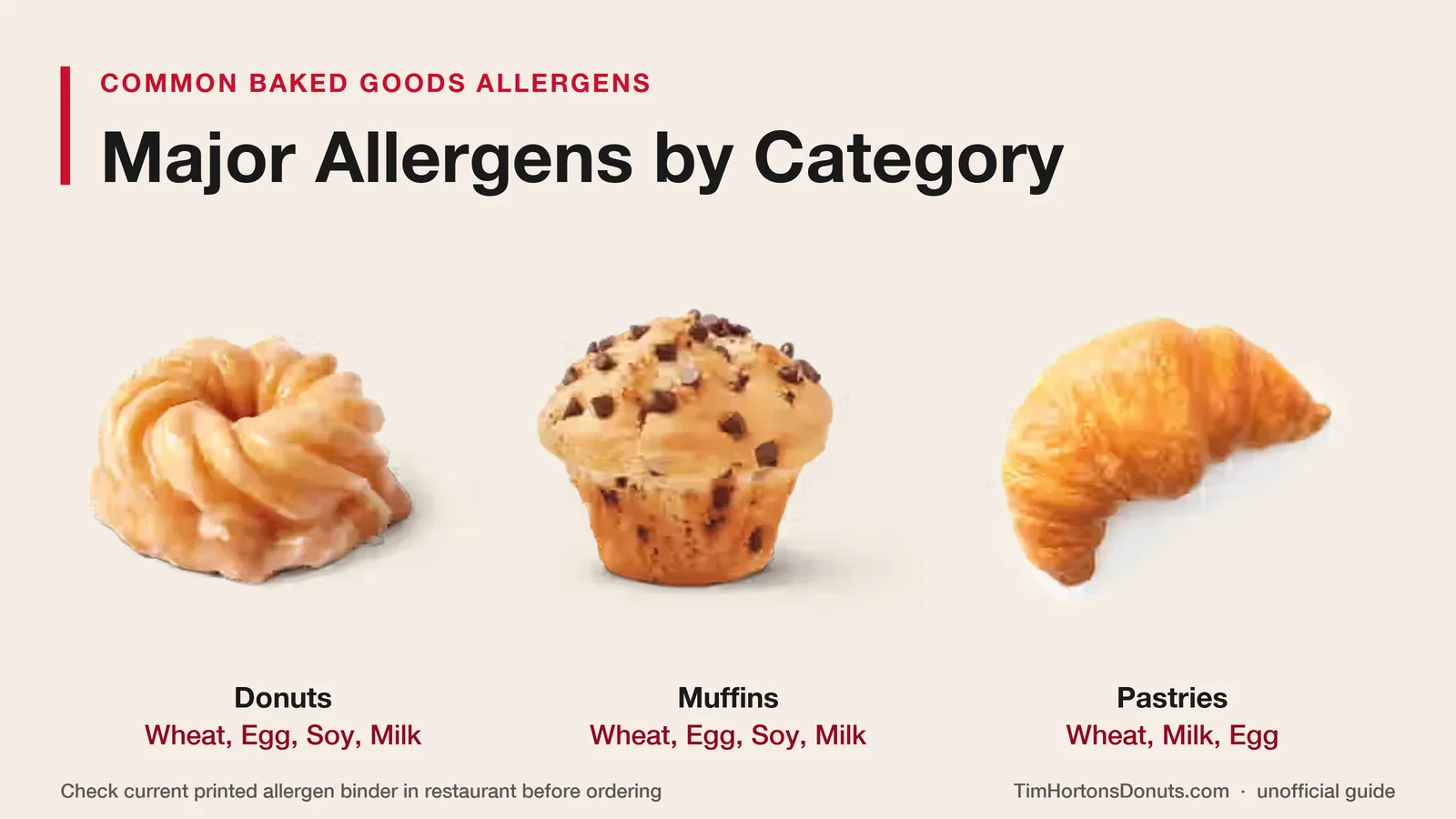
Tim Hortons baked goods represent the core of the brand, but almost every item on the bakery shelf contains wheat, gluten, and milk. From classic donuts to muffins and tea biscuits, patrons managing celiac disease or severe wheat allergies will find virtually no safe options among the fresh baked selections.
Beyond wheat flour, bakery glazes and dough formulations rely on milk derivatives and soy emulsifiers to maintain shelf texture and sweetness. Display cases also place nut-containing pastries alongside traditional glazes, increasing accidental transfer during rush hours.
Yeast Donuts vs. Cake Donuts: Ingredient Differences
A critical distinction on the bakery menu lies between yeast donuts and cake donuts. Yeast donuts (such as the Honey Dip, Boston Cream, Canadian Maple, and Apple Fritter) are leavened with yeast and have an airy, elastic crumb structure. In their base formulation, yeast donuts contain wheat and milk as primary ingredients, while egg and soy are designated as "may contain" risks due to shared factory lines.
In contrast, cake donuts (such as the Chocolate Glazed, Old Fashioned Plain, Birthday Cake, and Sour Cream Glazed) use chemical leaveners and incorporate eggs and soy flour directly into the batter. For diners with egg allergies, cake donuts pose a direct exposure hazard, whereas yeast donuts carry secondary cross-contact warnings. Boston Cream donuts add an additional layer: the custard filling contains sulphites as a stabilizing preservative.
| Donut / Bakery Item | Batter Base Type | Direct Allergens (Contains) | Cross-Contact Warnings (May Contain) |
|---|---|---|---|
| Honey Dip Donut | Yeast | Wheat, Gluten, Milk | Egg, Soy, Tree Nuts, Sulphites |
| Boston Cream Donut | Yeast | Wheat, Gluten, Milk, Sulphites | Egg, Soy, Tree Nuts |
| Apple Fritter | Yeast | Wheat, Gluten, Milk | Egg, Soy, Tree Nuts, Sulphites |
| Old Fashioned Glazed | Cake | Wheat, Gluten, Milk, Egg, Soy | Tree Nuts, Sulphites |
| Chocolate Glazed Donut | Cake | Wheat, Gluten, Milk, Egg, Soy | Tree Nuts, Sulphites |
| Walnut Crunch Donut | Specialty Cake | Wheat, Gluten, Milk, Egg, Soy, Tree Nuts | Peanuts, Sulphites |
| Blueberry Muffin | Batter | Wheat, Gluten, Milk, Egg, Soy | Tree Nuts |
| Peanut Butter Cookie | Cookie Dough | Wheat, Gluten, Milk, Egg, Soy, Peanuts | Tree Nuts |
To explore flavour selections and item descriptions across the complete pastry range, visit our full Tim Hortons donuts menu.
Tim Hortons Hot and Iced Drinks Allergen Guide
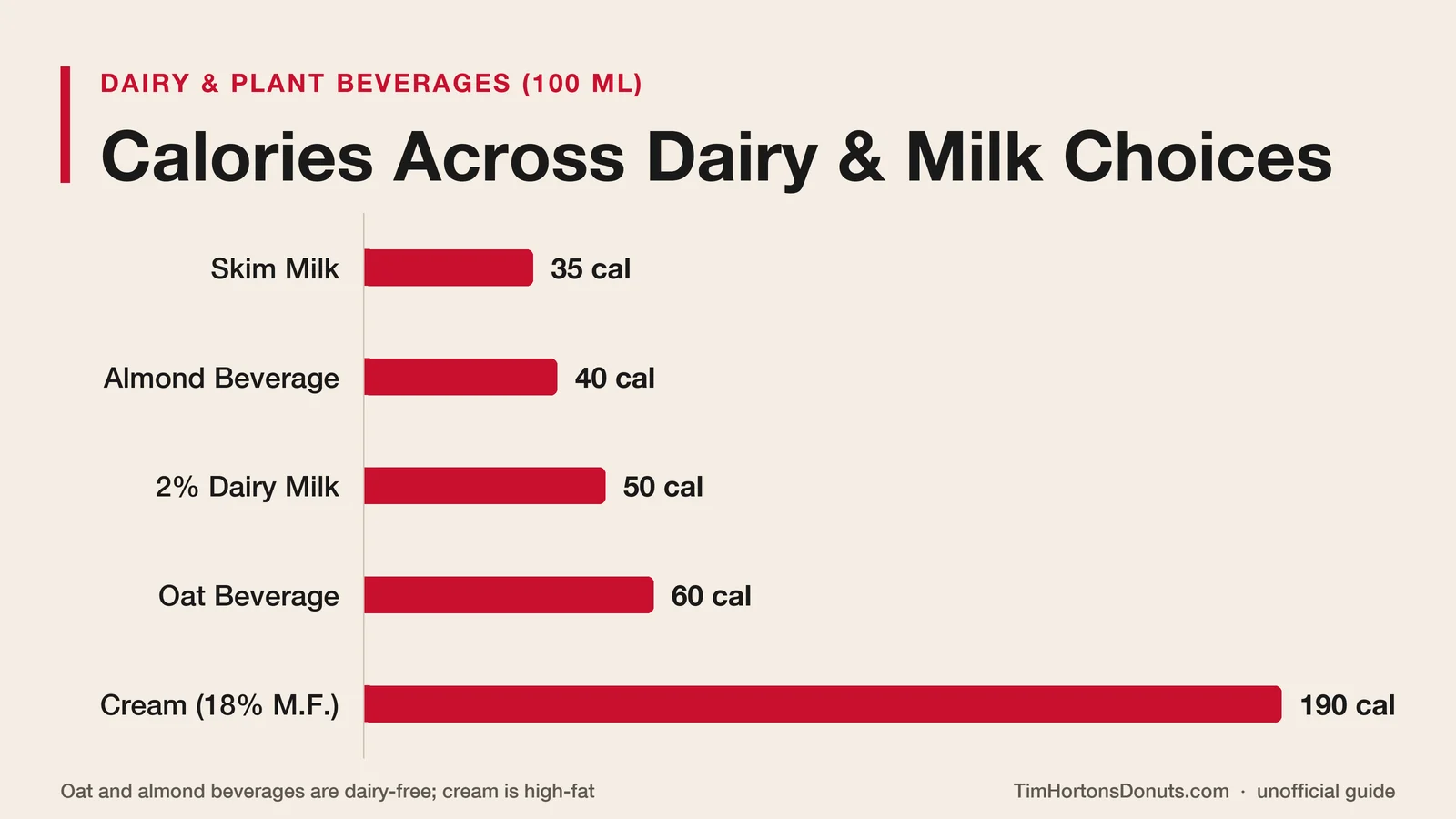
Tim Hortons beverages range from zero-allergen hot brewed coffees to complex dessert beverages containing multiple hidden allergen sources. Navigating the drink menu safely requires understanding how base syrups, powders, and milk alternatives behave under counter preparation protocols.
Black brewed coffee (Original Blend, Dark Roast, Decaf) and steeped or bagged teas contain zero priority allergens in their pure state. However, the moment dairy cream, specialty powders, or flavour swirls enter the cup, the allergen profile transforms significantly.
Dairy-Free Milk Alternatives: Oat Milk and Almond Milk
Tim Hortons Canada offers two plant-based milk alternatives across its restaurants: Silk Almond beverage and Chobani or Silk Oat beverage. These non-dairy options can be substituted into brewed coffee, iced coffee, hot lattes, iced lattes, and cold brew drinks for a modest upcharge.
While these plant milks eliminate cow's milk from your cup, they introduce other considerations. Almond beverage introduces tree nuts to drink stations, while oat milk provides a creamy, nut-free texture. Customers ordering oat milk should note that while oat milk is dairy-free, Tim Hortons does not certify its oat beverage as gluten-free. Cross-contact via shared espresso steam wands also remains an active possibility during busy service hours.
The Hidden Dairy Trap: French Vanilla and Hot Chocolate Powders
One of the most dangerous misconceptions among dairy-free diners is ordering a French Vanilla Cappuccino or Hot Chocolate made with oat milk or almond milk. These beverages are dispensed from automated mixing machines that combine hot water with pre-blended commercial dry powders.
Both French Vanilla and Hot Chocolate powders contain dehydrated skim milk powder, whey solids, and sodium caseinate as primary base ingredients. French Vanilla mix also contains soy derivatives. Requesting oat milk in a French Vanilla merely adds plant milk to a beverage that already contains substantial cow's milk protein. If you require a strictly dairy-free hot specialty drink, order a brewed coffee or Americano with flavoured syrup shots (such as vanilla or caramel syrup) and steamed oat milk instead.
Similarly, the Original Iced Capp relies on a pre-mixed Java Mix syrup base that is blended with heavy cream. While guests can order an Iced Capp with oat milk or almond milk substituted for the cream, the commercial Java Mix equipment and shared dispensing lines carry potential dairy, wheat, and tree nut cross-contact flags. For a broader overview of hot and cold beverages, check our comprehensive Tim Hortons coffee menu.
Tim Hortons Breakfast Sandwiches and Wraps Allergen Guide
The breakfast menu combines multiple priority allergens on a single assembly station, creating high risk for individuals managing egg, dairy, gluten, sesame, or mustard allergies. Breakfast sandwiches are built sequentially on stainless steel prep lines using toasted breads, heated meats, melted processed cheese, and cooked egg patties.
Since February 2021, Tim Hortons has used freshly cracked 100% Canadian Grade A large eggs for its breakfast sandwiches, prepared on dedicated griddle rings with butter-flavoured oil. While this improved ingredient quality, it cemented eggs as an unavoidable presence across the entire breakfast station.
| Breakfast Item | Bread Carrier | Direct Allergens Present | Hidden Ingredients to Note |
|---|---|---|---|
| Classic Bacon & Egg Biscuit | Homestyle Biscuit | Wheat, Milk, Egg, Soy | Butter oil on griddle, cheese slice |
| Sausage & Egg English Muffin | English Muffin | Wheat, Milk, Egg, Soy | Pork sausage patty contains soy |
| Steak & Egg Biscuit | Homestyle Biscuit | Wheat, Milk, Egg, Mustard, Soy | Seasoning marinade contains mustard |
| Sausage Farmer's Wrap | Flour Tortilla | Wheat, Milk, Egg, Soy | Spicy mayonnaise contains egg, mustard |
| Bagel B.E.L.T. (Plain Bagel) | Plain Bagel | Wheat, Milk, Egg, Soy, Sesame | Sesame transfer from toaster; bacon cure |
| Hash Brown | Potato Patty | None Direct (May Contain Wheat) | Oven baked; shared sheet pan contact |
Every standard breakfast sandwich includes a slice of processed cheddar cheese containing direct milk ingredients. The popular Farmer's Wrap wraps sausage or bacon, eggs, hash browns, and chipotle sauce in a wheat flour tortilla, combining wheat, milk, egg, and soy in a single roll. For full breakfast options, ingredient builds, and morning side choices, review our Tim Hortons breakfast menu.
Tim Hortons Lunch, Soups, and Chili Allergen Breakdown
Tim Hortons lunch options include hearty soups, Beef Chili, Flatbread Pizzas, and deli-style Craveables. Because soups and chili are held in hot wells and served with fresh bread, lunch items present specific allergen cross-contact risks that require careful review.
Soups change daily on restaurant rotation boards, but classic staples like Chicken Noodle and Boston Clam Chowder contain major priority triggers. Chicken Noodle soup features enriched egg noodles containing wheat and egg in a seasoned broth with soy. Boston Clam Chowder represents the only menu item tracking fish and shellfish, featuring sea clam meat alongside heavy dairy cream and wheat thickeners.
```
+--------------------------------------------------------------------------+
| TIM HORTONS LUNCH ALLERGEN PROFILE |
|---|
+--------------------------+-----------------------+-----------------------+
| Item Name | Contains (Direct) | May Contain (Contact) |
|---|
+--------------------------+-----------------------+-----------------------+
| Beef Chili | Soy | Wheat, Gluten |
|---|---|---|
| Boston Clam Chowder | Fish/Clam, Milk, Wheat | Soy |
| Broccoli Cheddar Soup | Milk, Wheat, Soy | None Listed |
| Pepperoni Flatbread Pizza | Wheat, Milk, Soy | Sesame |
| Bacon Everything Flatbread | Wheat, Milk, Sesame | Soy |
| Turkey Bacon Club | Wheat, Milk, Egg, Soy | Mustard, Sesame |
+--------------------------+-----------------------+-----------------------+
```
A common trap for gluten-sensitive guests is the Beef Chili. The chili recipe itself does not list wheat flour as a direct ingredient, utilizing textured soy protein and seasoned ground beef. However, Tim Hortons serves chili in the same counter area as soup bread bowls and toasted buns, meaning kitchen cross-contact with wheat and gluten cannot be ruled out for individuals with celiac disease.
Flatbread Pizzas are assembled on shared cutting boards and baked in rapid-cook ovens. The Bacon Everything Flatbread contains sesame seeds in its seasoning mix, which can transfer to classic Cheese or Pepperoni flatbreads cut with the same rolling wheel.
Safe Ordering Hacks: How to Navigate Food Allergies at Tim Hortons
Ordering safely at Tim Hortons requires proactive communication, clear instructions, and an understanding of kitchen workflows. Because team members are fast-food crew rather than clinical dietitians, using precise phrasing helps protect your health during busy service periods.
Follow these practical ordering protocols to minimize cross-contamination risk at Canadian locations:
- Declare an "Allergy Alert" Immediately: Begin your order by stating, "I have a severe food allergy to [allergen]." This prompts conscientious crew members to initiate basic safety protocols rather than treating your request as a routine preference.
- Request a Fresh Glove Change: Ask staff politely to put on fresh disposable gloves before handling your food. This prevents grease, breadcrumb, and cheese residues from transferring from previous orders.
- Ask for Un-toasted Bread: If you are avoiding sesame seeds or tree nuts, order your bagel, English muffin, or sandwich bun un-toasted. This avoids the shared conveyor toaster belt entirely.
- Request Clean Cutting Boards and Utensils: Ask crew to assemble your sandwich or wrap on a fresh sheet of deli paper using clean tongs or spatulas rather than the shared preparation cutting board.
- Stick to Simple Beverage Formulations: Choose black coffee, steeped tea, or Americanos with dairy-free oat or almond milk. Avoid machine-dispensed specialty powders like French Vanilla or Hot Chocolate.
- Double-Check Packaged Goods: When dining with severe celiac disease or nut allergies, pre-packaged items with manufacturer allergen labels (such as packaged potato chips or bottled juices) offer greater safety than open bakery display items.
- Consult Official Documentation: Always verify ingredient updates using the official Tim Hortons app or our official documentation and sources before trying new or limited-time seasonal products.
Frequently Asked Questions
What allergens does Tim Hortons track on its Canadian menu?
Tim Hortons tracks ten priority allergens in Canada: milk, eggs, wheat and gluten, peanuts, tree nuts, soy, sesame seeds, seafood (fish, crustaceans, molluscs), mustard, and sulphites. These align with Health Canada and Canadian Food Inspection Agency regulatory standards.
Can someone with a severe peanut allergy eat at Tim Hortons?
Peanuts are uncommon on the Tim Hortons menu, appearing primarily in pre-packaged peanut butter spread and Peanut Butter Cookies. However, because bakery items share display cases, cooling racks, and serving tongs, Tim Hortons cannot guarantee that any item is free from trace peanut cross-contact.
Does Tim Hortons French Vanilla contain dairy?
Yes. Tim Hortons French Vanilla Cappuccino powder contains dehydrated skim milk powder and whey protein as core ingredients. Because the dairy is integrated directly into the dry beverage powder mix, ordering French Vanilla with oat milk or almond milk does not make the drink dairy-free.
Is black coffee at Tim Hortons allergen-free?
Yes. Black brewed coffee—including Original Blend, Dark Roast, and Decaf—contains 100% Arabica coffee beans and water, with no added priority allergens. Plain bagged tea and steeped tea served without milk or cream are also allergen-free.
Does Tim Hortons have gluten-free donuts or baked goods?
No. Tim Hortons does not offer certified gluten-free donuts, Timbits, bagels, or muffins in Canadian restaurants. All fresh bakery items contain wheat flour or carry high cross-contamination warnings from shared ovens, display cases, and preparation surfaces.
What dairy-free milk alternatives does Tim Hortons offer?
Tim Hortons Canada offers Silk Almond beverage and Chobani or Silk Oat beverage at participating locations. Guests can substitute these non-dairy options into brewed coffee, iced coffee, lattes, and cold brew drinks for a small additional fee.
Is Tim Hortons chili gluten-free?
Tim Hortons Beef Chili does not contain wheat as a direct ingredient, listing soy as its only tracked allergen in official Canadian guides. However, because chili is prepared and ladled in shared kitchen environments alongside soups and breads, it is not certified gluten-free.
Are Tim Hortons hash browns prepared in a shared fryer?
Tim Hortons hash browns are baked on commercial oven trays rather than deep-fried in shared open oil fryers. However, baking trays and preparation surfaces handle breaded items, meaning trace gluten cross-contact can occur.
Can Tim Hortons staff guarantee an allergen-free order?
No. Tim Hortons explicitly states in its Canadian allergen policy that team members cannot guarantee an entirely allergen-free meal due to fast-paced shared prep surfaces, blenders, and toaster belts. Guests with severe allergies must exercise personal discretion.
Does Tim Hortons sanitize blenders between Iced Capps and Quenchers?
Blender pitchers are rinsed between drinks, but they are not fully chemically sanitized after every individual beverage. Customers with dairy, soy, or gluten allergies face minor cross-contact risks from blender blades and pitchers previously used for specialty cream drinks.
Are cake donuts or yeast donuts safer for egg allergies?
Yeast donuts (like Honey Dip or Apple Fritter) are leavened with yeast and carry egg as a "may contain" cross-contact risk rather than a direct recipe ingredient. Cake donuts (like Chocolate Glazed or Old Fashioned) contain whole eggs directly in the batter, making them unsafe for egg-allergic individuals.
Where can I confirm official ingredient lists for specific items?
Guests can view updated ingredient profiles by accessing the "Nutrition & Allergens" tab within the official Tim Hortons mobile app or by submitting a specific product inquiry to the Tim Hortons Guest Care Team through the official company Help Centre.
This guide is for informational purposes and does not constitute medical advice. Tim Hortons restaurants use shared prep tables, conveyor toasters, fryers, and blenders; cross-contamination cannot be completely eliminated. Severe allergy sufferers must consult restaurant staff and review the official app. See Sources.