Full Menu / Blog / Baked or Fried?
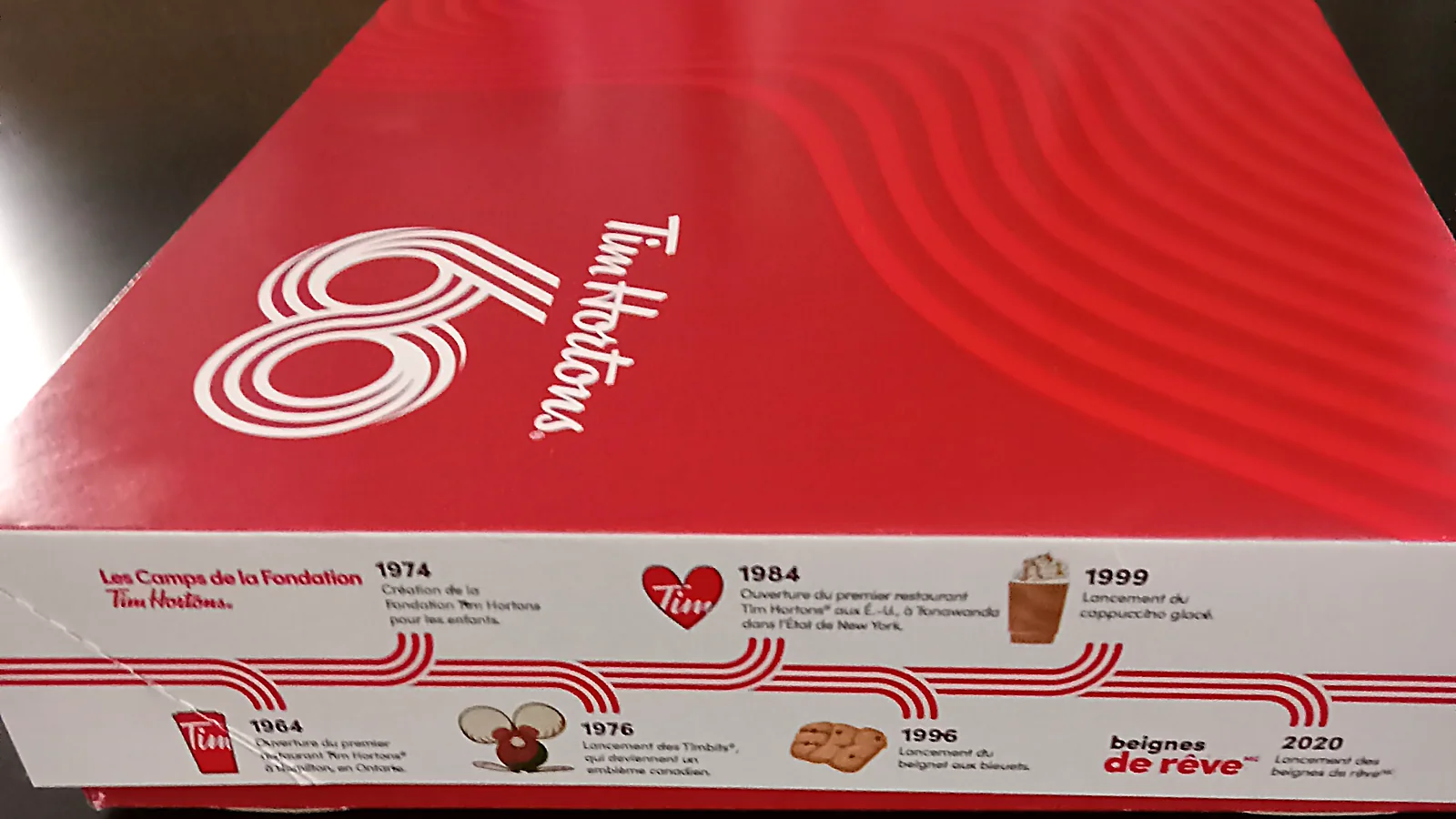
Tim Hortons donuts are baked, not fried in-store. Since 2003, the chain par-bakes donuts at a factory in Brantford, Ontario, flash-freezes them, and ships them frozen to its restaurants, where crews finish them with ovens, glaze, and fillings. Before 2003, donuts were fried fresh in each store every night.
How Are Tim Hortons Donuts Made Today?
Tim Hortons donuts today follow a par-bake, freeze, and finish system: they are partially cooked at a central factory, flash-frozen, shipped to restaurants, and completed in-store with a warm-through and a glaze or filling.
The Par-Bake, Flash-Freeze, Finish System
The modern pipeline starts at a production facility rather than a restaurant kitchen. Dough is mixed in industrial mixers, portioned and shaped, and then partially cooked — yeast rings are fried and cake donuts are baked, but both stop short of finished. The donuts then pass through a flash-freeze tunnel that locks in moisture, and the frozen product is packed and held in cold storage until a refrigerated truck picks it up.
A newspaper report from September 19, 2003 captured the change as it happened: stores in Atlantic Canada would no longer serve donuts made on site, but instead donuts that had been "remotely factory-fried and then frozen and shipped." That single line explains most of the confusion around this question — the frying still exists, it just no longer happens in the restaurant.
What Store Crews Actually Do to Each Donut
Inside the store, the finishing step is real work but not scratch baking. Crew members pull donuts from the walk-in freezer in small batches, run them through a thawing or warming oven, then dip them in glaze, pipe in fillings, and top them before they reach the display case. There are no in-store deep fryers for donuts anymore.
That finishing step is also where the fresh-bakery smell comes from, which is why a Honey Dip donut at 7 a.m. can genuinely have been warmed minutes earlier. The contrast is easiest to see against Krispy Kreme, whose stores make donuts from scratch in-house on a conveyor line — a method The New York Times explicitly compared against Tim Hortons' flash-frozen approach back in 2009.
Were Tim Hortons Donuts Ever Fried Fresh in Store?
Yes — for nearly four decades, every Tim Hortons donut was mixed, proofed, and fried in the back of the restaurant that sold it.
The Scratch-Baked Era: 1964 to the Early 2000s
Tim Hortons opened its first donut shop on May 17, 1964, in Hamilton, Ontario. The company was founded by Tim Horton, the NHL hockey player whose name is on the sign, alongside partner Jim Charade; Ron Joyce joined in 1967 and drove the expansion after Horton's death in 1974.
In those decades, stores employed bakers who worked overnight so the morning rush found fresh product. The chain's own Wikipedia history notes donuts "used to be made at night to be ready for the morning rush" — fried in-store, then glazed and filled on the spot.
Why Fresh In-Store Frying Couldn't Scale
The model worked when the chain had dozens of stores. Ron Joyce's expansion took it from 40 restaurants in 1974 to a 500th store in 1991, and the arithmetic of a scratch bakery in every location stopped adding up. Skilled bakers, square footage, equipment, and daily waste all multiplied with every new restaurant, and quality drifted between locations depending on who was working the fryer that night.
Why Did Tim Hortons Stop Frying Donuts in Store? The 2003 Switch
Tim Hortons moved donut production to centralized factories in 2003 to cut costs, standardize quality, and speed up service — a change regulars noticed immediately.
The "Always Fresh" Par-Bake Program of 2003
In 2003 the chain rolled out what became known as its par-bake system under the "Always Fresh" banner: donuts are par-baked — partly cooked — in a factory in Brantford, Ontario, then flash-frozen and shipped to restaurants, which finish them in in-store ovens throughout the day. As of the early 2000s, that system served roughly 3,600 Canadian restaurants; today the chain has more than 6,000 locations worldwide.
The program drew mockery because the slogan and the method seemed to contradict each other. The Halifax Daily News report of September 19, 2003 noted Atlantic Canada stores would stop serving fresh donuts, and critics pointed out the product was now factory-fried and frozen before it ever reached a store.
The Franchisee Class-Action Lawsuit (2008–2012)
The switch also angered franchise owners, not just customers. In 2008, two franchisees filed a class-action lawsuit against the parent company over the par-bake switch, claiming breach of contract, breach of duty of fair dealing, negligent misrepresentation, and unjust enrichment.
The franchisees said the change tripled their fixed cost per donut from 6 cents to 18 cents, and that they were required to buy product from the Brantford-based parbaking company then owned by IAWS Group PLC — after being told donuts would cost 11 or 12 cents each and Timbits 4.6 cents. The case was dismissed in February 2012, and the par-bake model stayed.
What Changed in 2003 (At a Glance)
| Before 2003 | After 2003 | |
|---|---|---|
| Dough | Mixed nightly in each store | Mixed at a central factory |
| Cooking | Donuts fried fresh in-store | Yeast donuts fried at the factory; cake donuts baked; both par-cooked and frozen |
| Shipping | None — sold where they were made | Flash-frozen, trucked to stores across Canada |
| In-store step | Fry, glaze, fill | Thaw, warm, glaze, fill |
| Franchisee-reported cost per donut | 6 cents | 18 cents |
Where Does Tim Hortons Bake Its Donuts Now?
Most Tim Hortons donuts sold in Canada are par-baked at the chain's production facility in Brantford, Ontario, then frozen and trucked to restaurants across the country.
The Brantford, Ontario Commissary and Other Hubs
Brantford, Ontario has anchored Canadian donut production since the par-bake era began, and franchisees were required to buy from the Brantford-based parbaking operation. The centralized setup runs standardized recipes, automated fryers, and quality-control checkpoints, so a Boston Cream donut is built to the same spec whether it is sold in Toronto or a town hours away.
One recent industry write-up (September 2026) adds that U.S. operations are supported by facilities in Rochester, New York and Glendale, Arizona — but that claim is uncited and reported by only one source, so treat the U.S. hub cities as unconfirmed.
How Frozen Donuts Get From Factory to Display Case
Flash-frozen donuts travel by refrigerated truck to clusters of restaurants, arriving roughly two to three times a week depending on store volume. Crews move the pallets straight into walk-in freezers, then pull small batches to finish through the day.
The whole pipeline from mixer to display case is estimated to run 24 to 72 hours. In practice that means the donut you buy before noon was almost always finished that morning, even if the dough itself was portioned days earlier.
Which Tim Hortons Donuts Are Fried vs. Baked? (Yeast vs. Cake)
At the factory, Tim Hortons fries its yeast donuts and bakes its cake donuts — by the time either type reaches your store, both arrive par-cooked and frozen. See the full lineup on the Tim Hortons donuts menu.
Yeast Donuts: Fried at the Factory
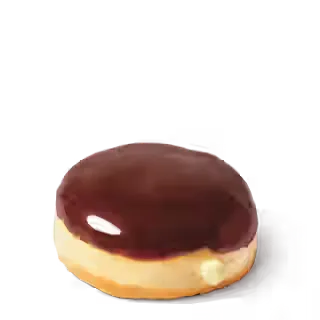
Yeast-raised dough made from flour, water, sugar, yeast, and salt gets its light, airy texture from proofing, then a hot-oil fry that creates the thin golden crust. These are the classic raised rings — including the glazed Honey Dip — plus filled yeast donuts like the Boston Cream, a soft yeast shell with chocolate on top and a vanilla custard filling borrowed from a Boston cream pie recipe more than 100 years old.

Cake Donuts: Baked, Then Warmed In-Store
Cake donuts skip the yeast entirely. A baking-powder batter is baked, producing a denser, more compact crumb with a crispier edge. Tim Hortons' Old Fashioned Plain — 280 calories — and the glazed Apple Fritter both fall in this group.


Timbits belong to the same production family: bite-sized pieces of sweet dough, fried and coated in sugar, at 70 calories per 19-gram Timbit. They are formed from the same sweet dough rather than literally punched out of ring centers, despite the "donut holes" nickname.

Fried vs. Baked Donuts: What's Actually Different?
A fried donut gets a crisp golden crust from hot oil in seconds, while a baked donut rises without oil — smaller, denser, and lower in fat. The method changes everything about texture and calories.
Taste, Texture, and the Golden Crust
Frying cooks dough from the outside in at temperatures typically between 325°F and 375°F, caramelizing surface sugars into a crisp crust while the inside stays soft and airy. Baking produces a cakier, more uniform crumb and no real crust, which is why baked donuts read as more "muffin-like."
The industry splits cleanly on this. Krispy Kreme runs doughnuts through a vegetable-oil bath heated to about 355–360°F on a conveyor; Dunkin' Donuts fries yeast dough in vegetable oil in-store. Tim Hortons simply moved that same fried step to the factory in 2003 — the store now does only the finishing.
Calories, Fat, and Palm Oil
Frying adds oil, so fried donuts carry more fat than baked ones; doughnut shortenings typically leave yeast donuts at 20–25% fat and cake donuts at 25–30%. Tim Hortons uses palm oil in its shortening, and spokesperson Olga Petrycki told CTVNews.ca the company's goal is to buy 100% of its palm oil from verified sustainable sources.
For reference: a Boston Cream donut has 240 calories, an Old Fashioned Plain has 280 calories, and a single Timbit has 70 calories (19 g).
| Feature | Fried donut | Baked donut |
|---|---|---|
| How it's cooked | Submerged in hot oil (325–375°F) | Oven heat, no oil bath |
| Texture | Airy, light, chewy | Dense, compact, cakier |
| Crust | Thin, crisp, golden | Soft or slightly crisp edge, no true crust |
| Fat content | Higher (oil absorbed: ~20–25% yeast) | Lower |
| Tim Hortons examples | Honey Dip, Boston Cream, Timbits | Old Fashioned Plain, Apple Fritter |
Frequently Asked Questions
Are Tim Hortons donuts fried or baked?
Tim Hortons donuts are baked in the sense that they are par-baked at a factory in Brantford, Ontario, flash-frozen, and finished in in-store ovens. The frying that remains happens at the factory before freezing — no Tim Hortons store deep-fries donuts anymore, and it hasn't since the 2003 switch.
Are Tim Hortons donuts made fresh in-store?
No. Donuts arrive par-baked and frozen, and stores finish them with a warm-through, glaze, and fillings — often within the hour you buy them. Before 2003, donuts were fried fresh in each store overnight.
Where is the Tim Hortons donut factory?
Canadian donuts are produced at the chain's par-bake facility in Brantford, Ontario. One September 2026 write-up also names Rochester, New York and Glendale, Arizona as U.S. hubs, but that report is uncited.
Are Tim Hortons donuts shipped frozen?
Yes. Donuts are flash-frozen at the factory, delivered by refrigerated truck two to three times a week, and kept in walk-in freezers until crews finish them in small batches.
What year did Tim Hortons stop frying donuts in stores?
2003. That year the chain switched from scratch baking and in-store frying to the par-bake system, a change reported by the Halifax Daily News on September 19, 2003.
Why do Tim Hortons donuts taste different than they used to?
Because production moved out of the stores in 2003. Donuts are now factory-made, flash-frozen, and finished in-store rather than fried fresh on site each night — a change franchisees challenged in a 2008 class-action lawsuit that was dismissed in February 2012.
Are Tim Hortons donuts cake or yeast?
Both. Yeast-raised donuts like the Honey Dip and Boston Cream are fried at the factory, while cake donuts like the Old Fashioned Plain and Apple Fritter are baked. The dough determines the method.
What kind of oil does Tim Hortons use for donuts?
Palm oil is used in the shortening. Spokesperson Olga Petrycki told CTVNews.ca the company's goal is to source 100% of its palm oil from verified sustainable suppliers.
Are Timbits made from donut holes?
Not literally. Timbits are bite-sized pieces formed from the same sweet dough, fried, and coated in sugar — 70 calories each. The "donut holes" name is a nickname, not the production method.
How many calories are in a Tim Hortons donut?
An Old Fashioned Plain has 280 calories, a Boston Cream has 240 calories, and a Timbit has 70 calories (19 g). Fried yeast donuts generally carry more fat than baked cake donuts.
Are Krispy Kreme donuts fried or baked?
Fried. Krispy Kreme makes donuts from scratch in-store and runs them through a vegetable-oil bath at about 355–360°F on a conveyor — the approach Tim Hortons left behind in 2003.
Do Tim Hortons donuts contain eggs or dairy?
Many recipes contain milk and milk derivatives such as whey powder, and the chain has no vegan donuts; some items list no eggs. Check the current ingredient list for the specific donut if you have an allergy.
This is an independent, unofficial guide to the Tim Hortons Canada menu. It is not affiliated with, endorsed by, or sponsored by Tim Hortons or Restaurant Brands International. Production methods, prices and calories are reference information and can change — always confirm current details with the official Tim Hortons app or your local restaurant. Historical and production details in this article are compiled from the public sources listed in Sources, including the Tim Hortons Wikipedia article (Baking methods and lawsuit), Halifax Daily News reporting from September 2003, and CTVNews.ca coverage of palm oil sourcing.